
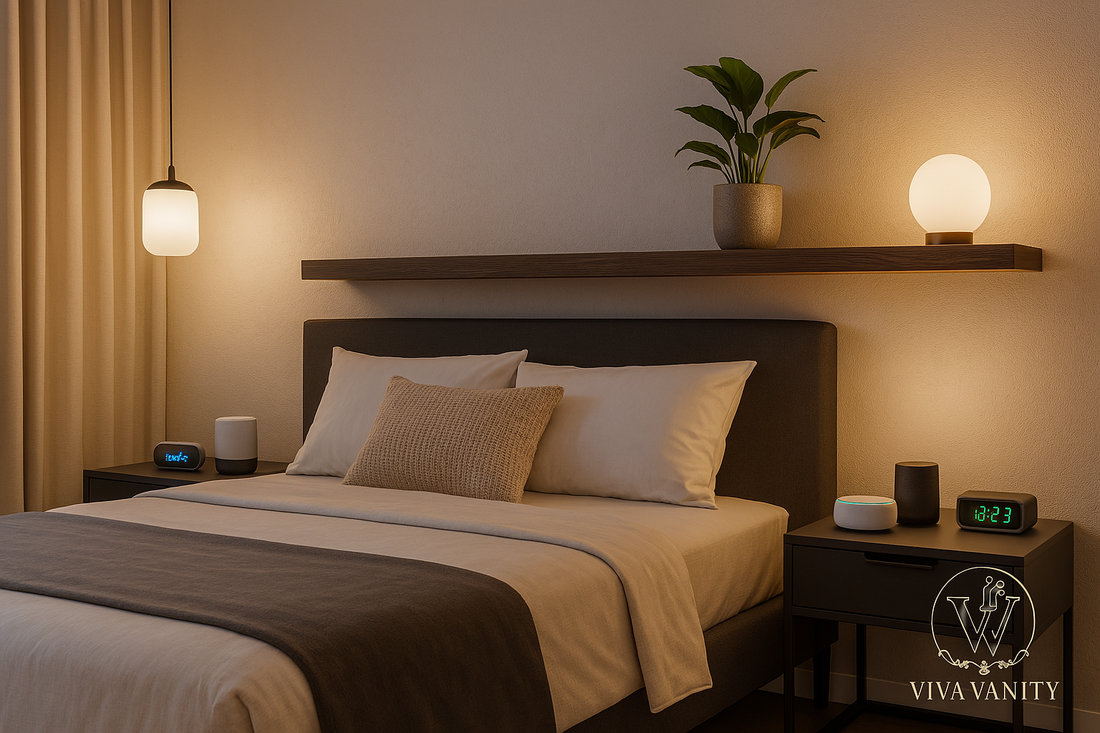
How to Set Up a Smart Bedroom from Scratch
Share
✨ Introduction: Welcome to the Future of Bedroom Living
In the era of intelligent living, our bedrooms are no longer just places to sleep. They are wellness sanctuaries, productivity zones, and entertainment hubs. For urban dwellers who value both function and form, a well-thought-out smart bedroom furniture setup is the perfect way to elevate everyday living.
Imagine waking up gently to a sunrise simulation, with temperature-adjustable sheets and voice-activated lighting. Your furniture not only stores and organizes your essentials but also monitors your sleep, enhances your wellness, and complements your personal aesthetic. This is not a dream—this is the Viva Vanity lifestyle.
💡 Why Discerning Homeowners Choose Smart Furniture
Modern homeowners are making mindful decisions about their spaces. Here’s why smart furniture is gaining traction:
-
Maximizing Small Spaces: In city apartments and compact homes, smart furniture often combines multiple functions, helping you do more with less.
-
Aesthetic Minimalism: The clean lines and sleek surfaces of smart pieces blend seamlessly into modern interiors.
-
Lifestyle Enhancement: Whether it’s smart beds with massage features or nightstands that double as wireless charging stations, every piece is designed to simplify life.
-
Health & Wellness: Many smart bedroom pieces now come with features like posture correction, sleep tracking, and temperature regulation.
-
Personalization: From customizable lighting schemes to app-controlled headboards, your space reflects your preferences.
🎯 Tips for Choosing the Right Smart Bedroom Furniture
Setting up a smart bedroom from scratch can feel overwhelming. Here are curated tips based on your lifestyle:
1. For Small Apartments:
-
Opt for beds with under-frame storage or foldable Murphy-style options.
-
Choose a smart dresser with integrated lighting and vertical design.
2. For Young Couples:
-
Go for adjustable smart beds with dual-zone climate control.
-
Use ambient lighting synced with relaxation modes.
3. For Tech Enthusiasts:
-
Integrate modular smart hubs within nightstands.
-
Choose voice-activated window shades or touch-screen vanity mirrors.
4. For Families with Kids:
-
Look for anti-bacterial surface coatings and rounded corners.
-
Install motion-sensor nightlights in drawer units.
5. For Wellness Seekers:
-
Choose smart mattresses with sleep tracking and spinal support.
-
Use aromatherapy diffusers embedded in headboards.
🪑 Viva Vanity Smart Furniture Picks
1. NovaGlow Smart Nightstand
An elegant piece with built-in wireless charging, biometric lock drawer, and ambient lighting. View Product
2. LumoLift Adjustable Smart Bed
Tailored support with zero-gravity mode, snore detection, and an app-controlled massaging base. View Product
❄️ Conclusion: Your Bedroom, Reimagined
Your smart bedroom doesn’t just serve you while you sleep. It adapts to your daily rhythm, enhances your health, and reflects your refined taste. With Viva Vanity’s premium collection of smart bedroom furniture, you can craft a space where luxury meets intelligence.
✉️ Ready to upgrade? Explore our curated selection and subscribe for exclusive access to product launches, design tips, and personalized offers.
#SmartBedroom #LuxuryFurniture #InteriorTech #VivaVanity