
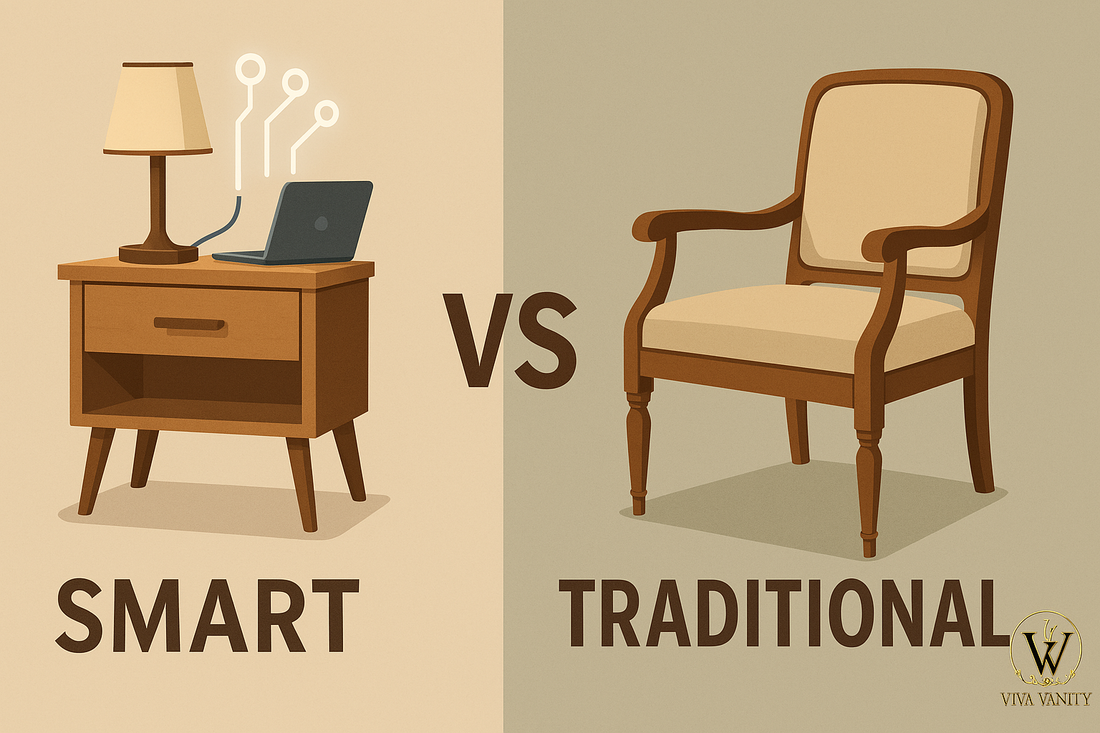
Smart Furniture vs. Traditional Furniture: What's Better?
Share
🌟 Introduction: A New Era in Home Living
In the dynamic world of interior design, the line between style and technology is rapidly blurring. For the urban elite, where space is at a premium and every design choice speaks to personal identity, furniture has transcended its static role. Enter smart furniture—pieces embedded with technology, designed to adapt, respond, and enhance your lifestyle. But how does it compare to its classic counterpart? Is smart furniture a necessity or a luxury indulgence?
In this pillar guide, we'll dive into the refined world of smart vs traditional furniture, uncovering their benefits, trade-offs, and the path toward a modern, intelligent living space that reflects both beauty and function.
🔧 Why Smart Furniture Appeals to the Modern Sophisticate
-
Space Optimization: Smart furniture often incorporates modular designs with hidden compartments, foldable elements, or multi-functionality—a perfect companion for city dwellers navigating compact apartments.
-
Integrated Technology: Think wireless charging, voice control, ambient lighting, and even sleep monitoring. These features align perfectly with tech-forward lifestyles.
-
Elegant Minimalism: Modern smart pieces favor sleek silhouettes, high-quality materials, and minimalist aesthetics that enhance, rather than clutter, a room.
“Smart furniture isn’t just about tech—it’s about enhancing the experience of living beautifully and efficiently.”
Contrast this with traditional furniture, which, while timeless and charming, often prioritizes form over adaptive functionality.
💡 The Benefits of Traditional Furniture
While smart furniture reigns in innovation, traditional designs still have their strengths:
-
Craftsmanship & Heritage: Antique or handcrafted furniture offers a sense of permanence, nostalgia, and artistry that smart pieces sometimes lack.
-
Simplicity & Familiarity: Not everyone desires tech in every aspect of life. For some, a hand-carved wooden desk or a tufted leather sofa provides comfort and grounding.
-
Longevity: Many traditional pieces are built to last for decades, with materials that age gracefully.
The ideal modern home may blend both worlds—utilizing smart furniture for daily convenience and traditional pieces as statements of timeless elegance.
🔍 How to Choose: Smart Furniture or Traditional?
1. For Small Space Living
-
Smart pick: Foldable smart desks, convertible beds with USB ports, and coffee tables with built-in coolers.
-
Why: They maximize functionality without compromising style.
2. For Family Homes
-
Smart pick: Dining tables with voice-controlled lighting or kid-proof smart seating.
-
Why: Convenience and safety for multitasking households.
3. For the Tech Enthusiast
-
Smart pick: Smart mirrors with built-in voice assistants, recliners with massage programs.
-
Why: Seamless integration with smart homes.
4. For the Aesthetic Purist
-
Traditional pick: Artisanal wood furniture, vintage pieces with patina.
-
Why: Evokes emotion, craftsmanship, and warmth.
🫎 Featured Viva Vanity Products
1. Nova Smart Recliner Chair
An exquisite blend of Scandinavian design and AI-powered massage tech. Features adjustable lumbar support, heating, and app-controlled recline. Shop Nova Recliner
2. Eclipse Smart Console Table
Sleek, modern console with hidden drawers, wireless charging pad, and motion-activated under-lighting. Ideal for entryways. Explore Eclipse Console
🚪 Final Thoughts: Which is Truly Better?
The answer lies in balance. Smart furniture brings efficiency, tech, and sleek aesthetics. Traditional furniture offers depth, heritage, and emotional connection. For the modern American homeowner, the optimal space is one that harmonizes both—a curated mix of innovation and tradition.
📢 Explore More with Viva Vanity
Ready to upgrade your home with smart sophistication? Discover Viva Vanity's curated collection of smart furniture for modern living.
Subscribe to our newsletter for insider tips, design inspiration, and exclusive offers.
Written by Viva Vanity Editorial Team — Where Luxury Meets Innovation.